
 quiet
quiet
- Swell period
- 10s
- Wind
- SW 41 km/h
- Score
- 18
- Confidence
- 65%

All spots / Ireland
October — March
Mullaghmore
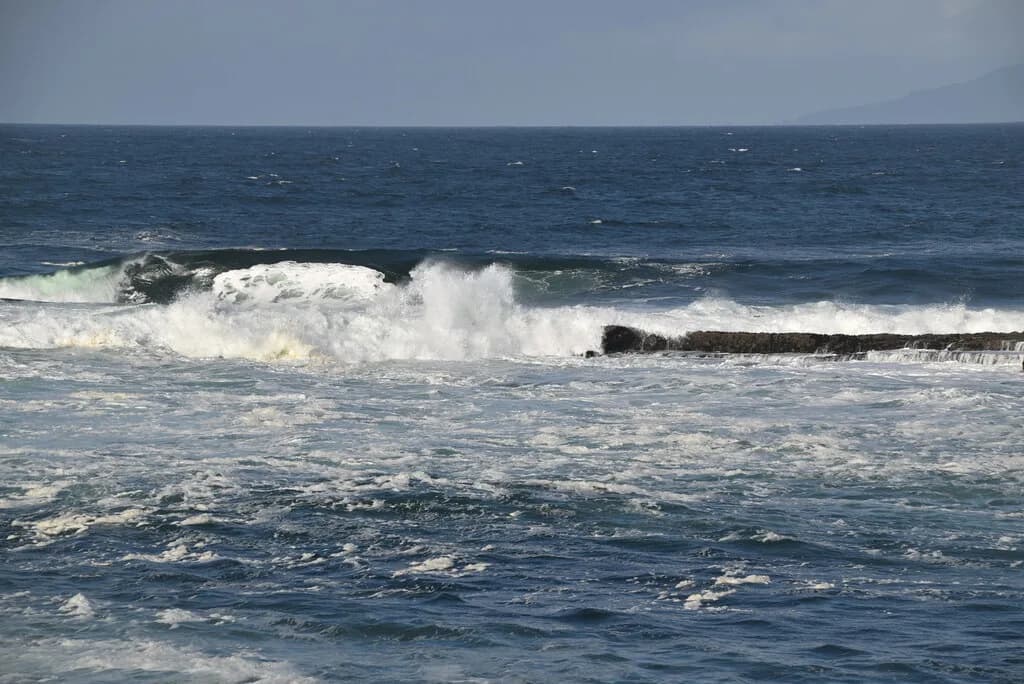
North Atlantic storms light up a dramatic Irish reef framed by cliffs and wintry weather.
quiet
Valid 2026-09-04
18Wave score
Forecast confidence65%
At a glance
The latest outlook for Mullaghmore
No major big-wave window is confirmed yet. We are monitoring the next long-period pulse.
Wave face1.9–3.5 m
Swell period10s
WindSW 41 km/h
Confidence65%
Location
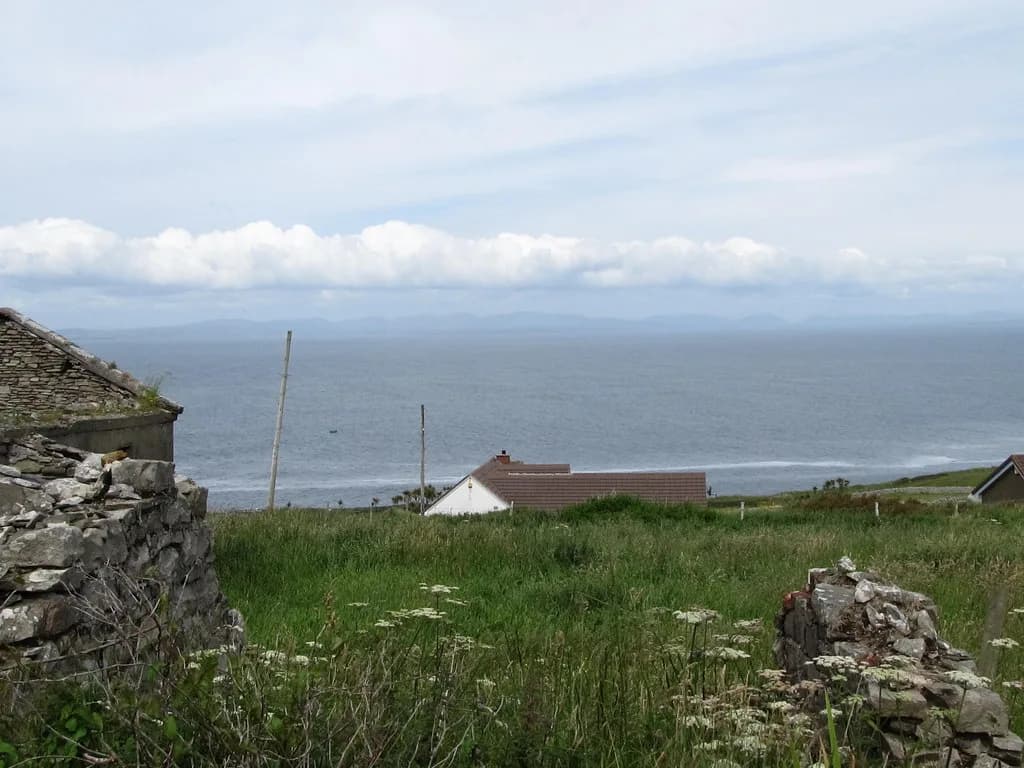
Where is Mullaghmore?
Explore the surrounding coastline and open the marker for location details.
- Mullaghmore: 54.468, -8.455
See the break
Explore the area
What to do in Mullaghmore
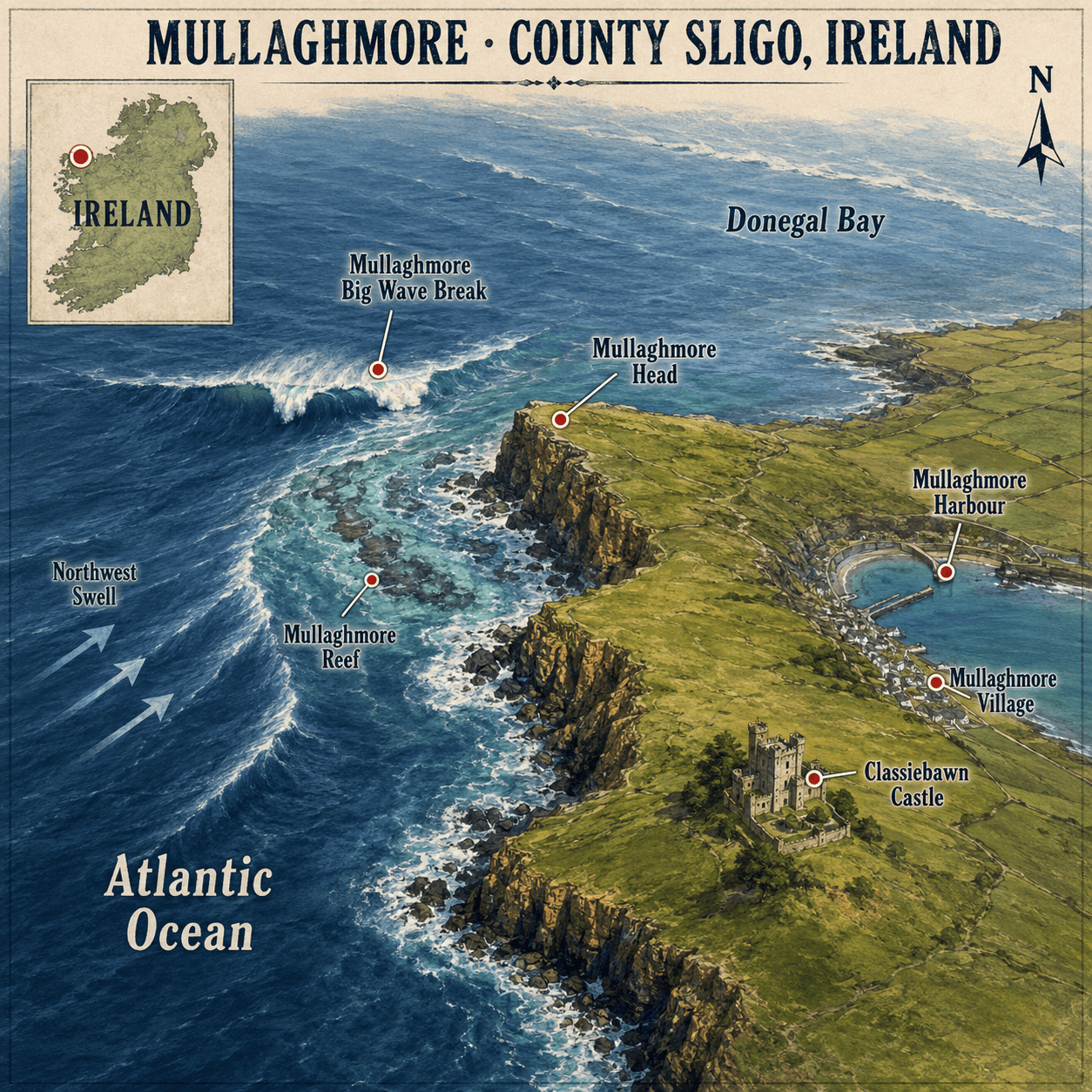
Use the illustrated map to discover beaches, viewpoints and local landmarks.
Mullaghmore
A renowned Irish big-wave break located offshore from the exposed cliffs of Mullaghmore Head.
Big Wave Break
Powerful Atlantic swells rise over the submerged reef, producing fast, heavy and often enormous waves.
Mullaghmore Reef
The underwater rock formation that focuses incoming swell and shapes Mullaghmore’s powerful breaking wave.
Northwest Swell
Long-period ocean energy approaches from the northwest before meeting the shallower reef.
Mullaghmore Head
A dramatic coastal headland providing the main land reference for locating the offshore break.
Mullaghmore Harbour
A small, sheltered harbour positioned on the calmer eastern side of the peninsula.
Mullaghmore Village
A picturesque seaside village overlooking the harbour and sheltered waters of the bay.
Classiebawn Castle
A distinctive 19th-century castle standing prominently above the surrounding fields and coastline.
Donegal Bay
The broad Atlantic bay north of Mullaghmore, exposed to powerful swells travelling toward the Irish coast.
Atlantic Ocean
The open ocean supplying the powerful winter swells that make Mullaghmore a world-class big-wave location.
Wave face
Swell history & forecast
Recent results and the next 16 days, shown against stacked 1.8 m people for scale.
Next 16 days
- Swell period
- 11s
- Wind
- S 18 km/h
- Score
- 38
- Confidence
- 75%
- Swell period
- 4s
- Wind
- S 28 km/h
- Score
- 10
- Confidence
- 70%
- Swell period
- 8.5s
- Wind
- SW 22 km/h
- Score
- 18
- Confidence
- 62%
- Swell period
- 12s
- Wind
- SW 24 km/h
- Score
- 42
- Confidence
- 55%
- Swell period
- 12s
- Wind
- SW 24 km/h
- Score
- 42
- Confidence
- 40%
- Swell period
- 9s
- Wind
- SW 18 km/h
- Score
- 12
- Confidence
- 45%
- Swell period
- 9s
- Wind
- SW 22 km/h
- Score
- 18
- Confidence
- 30%
- Swell period
- 10s
- Wind
- SW 22 km/h
- Score
- 20
- Confidence
- 30%
- Swell period
- 11s
- Wind
- W 24 km/h
- Score
- 26
- Confidence
- 25%
- Swell period
- 10.5s
- Wind
- SW 22 km/h
- Score
- 20
- Confidence
- 25%
- Swell period
- 10s
- Wind
- S 22 km/h
- Score
- 18
- Confidence
- 20%
- Swell period
- 10s
- Wind
- SW 22 km/h
- Score
- 22
- Confidence
- 18%
- Swell period
- 10s
- Wind
- SW 24 km/h
- Score
- 28
- Confidence
- 20%
- Swell period
- 11s
- Wind
- SW 24 km/h
- Score
- 22
- Confidence
- 15%
- Swell period
- 10s
- Wind
- SW 24 km/h
- Score
- 18
- Confidence
- 20%
When to visit
Month-by-month season planner
Typical big-wave season: October — March. Forecasts still decide the worthwhile days.
- Jan3.6 mAverage swellTypical 1.6–6.1 mBig-wave season
- Feb3.4 mAverage swellTypical 1.5–5.8 mBig-wave season
- Mar3.0 mAverage swellTypical 1.4–5.1 mBig-wave season
- Apr2.6 mAverage swellTypical 1.2–4.4 mShoulder month
- May2.3 mAverage swellTypical 1.0–3.9 mUsually quieter
- Jun2.0 mAverage swellTypical 0.9–3.4 mUsually quieter
- Jul1.9 mAverage swellTypical 0.9–3.2 mUsually quieter
- Aug2.0 mAverage swellTypical 0.9–3.4 mUsually quieter
- Sep2.4 mAverage swellTypical 1.1–4.1 mShoulder month
- Oct2.9 mAverage swellTypical 1.3–4.9 mBig-wave season
- Nov3.3 mAverage swellTypical 1.5–5.6 mBig-wave season
- Dec3.7 mAverage swellTypical 1.7–6.3 mBig-wave season
Offshore significant wave height (Hs). Typical range is P10–P90, not breaking wave-face height.
- Confidence
- Medium–high
- Estimated uncertainty
- ±0.4 m
Plan the journey
How to reach Mullaghmore
Travel times are estimates and can increase with traffic, weather, border formalities or major swell crowds.
Big-wave access warning
Final lineup access requires professional big-wave experience, local knowledge and a coordinated safety team when conditions are large.
Dublin Airport (DUB)
Dublin is the primary international gateway for the journey to northwest Ireland.
Dublin Airport → Mullaghmore
Drive northwest via the M3 and N4 toward Sligo, then continue through Drumcliffe, Grange and Cliffoney. The route is roughly 220 kilometres.
Travel detailsMullaghmore village
The village keeps accommodation, harbour access, viewpoints and local boat contacts close together. Bundoran is 30–40 minutes away.
Accommodation → Mullaghmore Harbour
The harbour is only a short drive or walk from most village accommodation.
Mullaghmore Harbour → Outer reef
Established local teams use support boats or jet skis with rescue sleds. The shallow reef is not a normal visitor paddle-out.
Travel details
Guides
Plan the whole visit
Forecast, viewing, travel and safety guidance in one place.
When to visit
Plan flexibly
The established big-wave season at Mullaghmore is October — March. The best days are uncommon and usually become clear only a few days ahead.
Read guide →Where to watchGive the ocean room
View Mullaghmore from established public viewpoints and obey closures, barriers and local authorities.
Read guide →Where to stayTravel with flexibility
Stay within easy reach of Mullaghmore, but avoid booking solely around a long-range forecast.
Read guide →SafetyNon-negotiable basics
Big-wave coastlines are hazardous for spectators and surfers. Conditions at Mullaghmore can change quickly.
Read guide →RecordsVerified history first
Mullaghmore has earned its place in big-wave history through remarkable conditions, surfers and local communities.
Read guide →Common questions
Mullaghmore FAQs
Practical answers for planning a safe, well-informed visit.
When is Mullaghmore’s big-wave season?+
Mullaghmore’s typical big-wave season runs from October through March as powerful North Atlantic systems reach Ireland’s northwest coast.
Where should visitors stay for Mullaghmore?+
Mullaghmore village is the closest and most practical base, placing accommodation, harbour access and headland viewpoints within a few minutes of each other.
How do surfers access Mullaghmore’s outer reef?+
Established local teams use jet skis with rescue sleds or support boats from Mullaghmore Harbour. The shallow, heavy outer reef is not a normal visitor paddle-out.
Is Mullaghmore suitable for beginners?+
No. The renowned outer reef is a professional-level big-wave venue. Visitors should never attempt to locate or approach the peak without an experienced local team and safety plan.