
 quiet
quiet
- Swell period
- 15.5s
- Wind
- S 22 km/h
- Score
- 52
- Confidence
- 65%
All spots / Chile
April — September
Punta de Lobos
Chile’s iconic left point channels Southern Ocean energy past black rock pillars and rugged cliffs.
quiet
Valid 2026-09-04
52Wave score
Forecast confidence65%
At a glance
The latest outlook for Punta de Lobos
No major big-wave window is confirmed yet. We are monitoring the next long-period pulse.
Wave face1.8–2.4 m
Swell period15.5s
WindS 22 km/h
Confidence65%
Location
Where is Punta de Lobos?
Explore the surrounding coastline and open the marker for location details.
- Punta de Lobos: -34.423, -72.05
See the break
Explore the area
What to do in Punta de Lobos
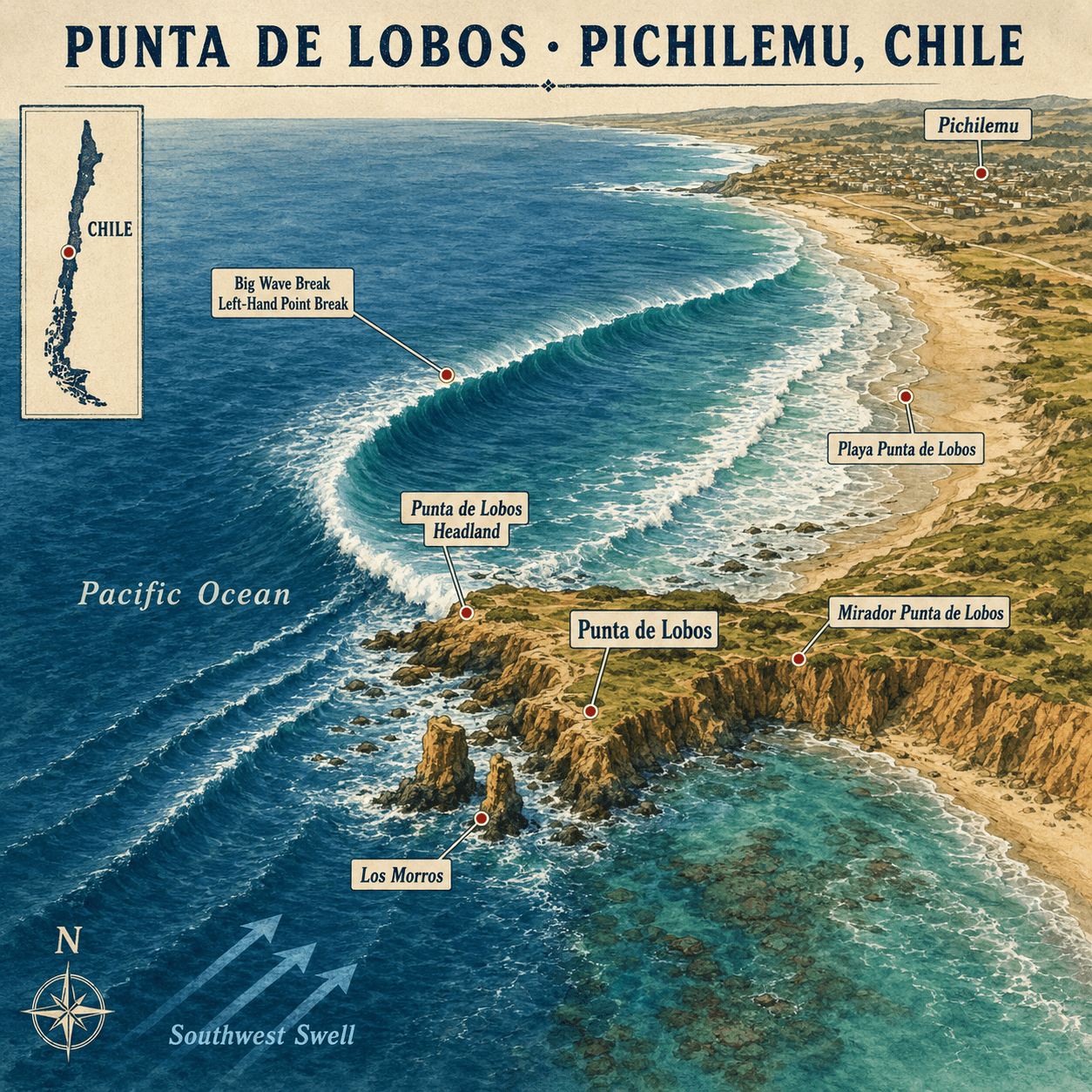
Use the illustrated map to discover beaches, viewpoints and local landmarks.
Punta de Lobos
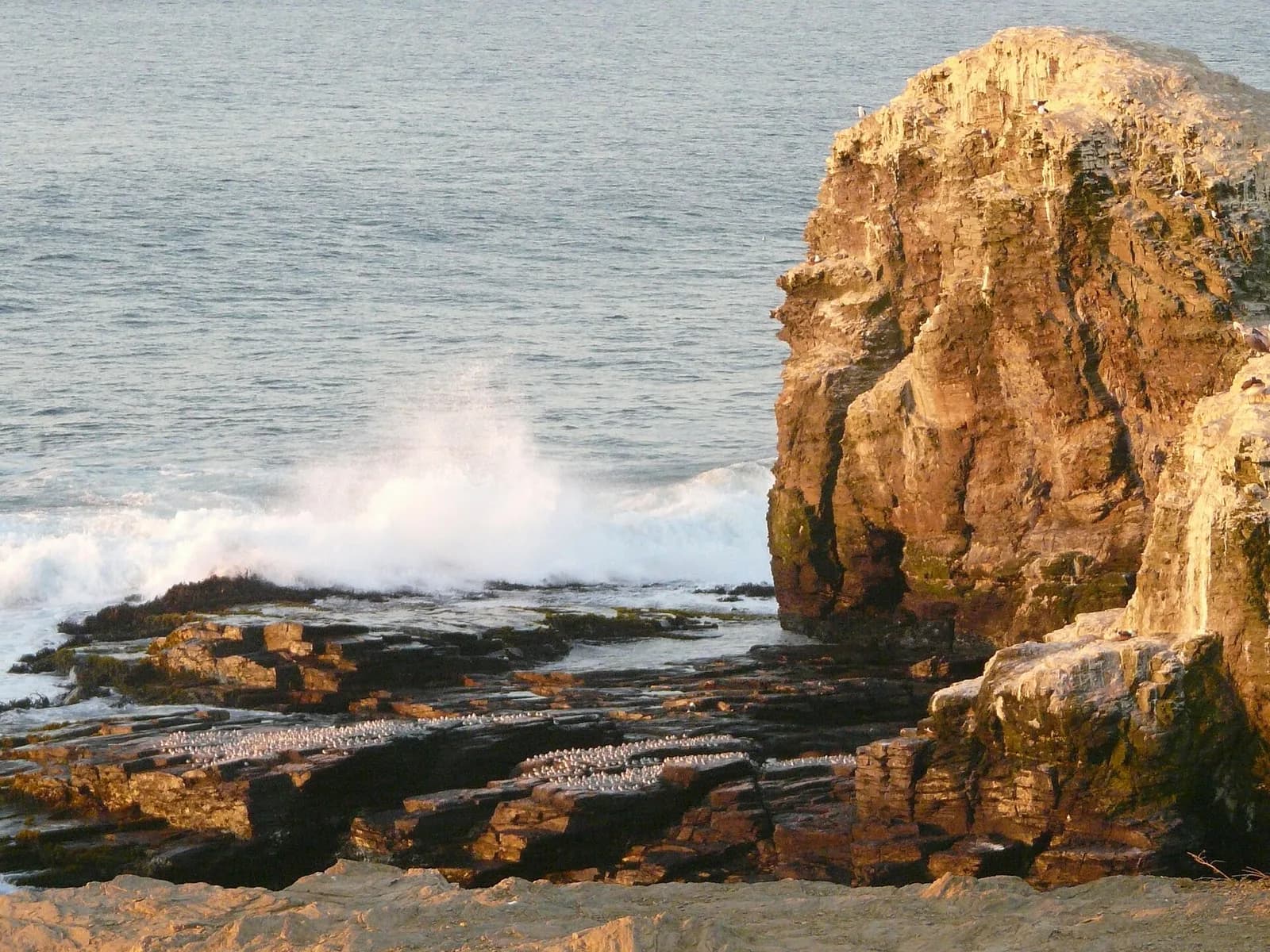
A world-renowned surf destination located on a dramatic headland south of Pichilemu.
Big Wave Break
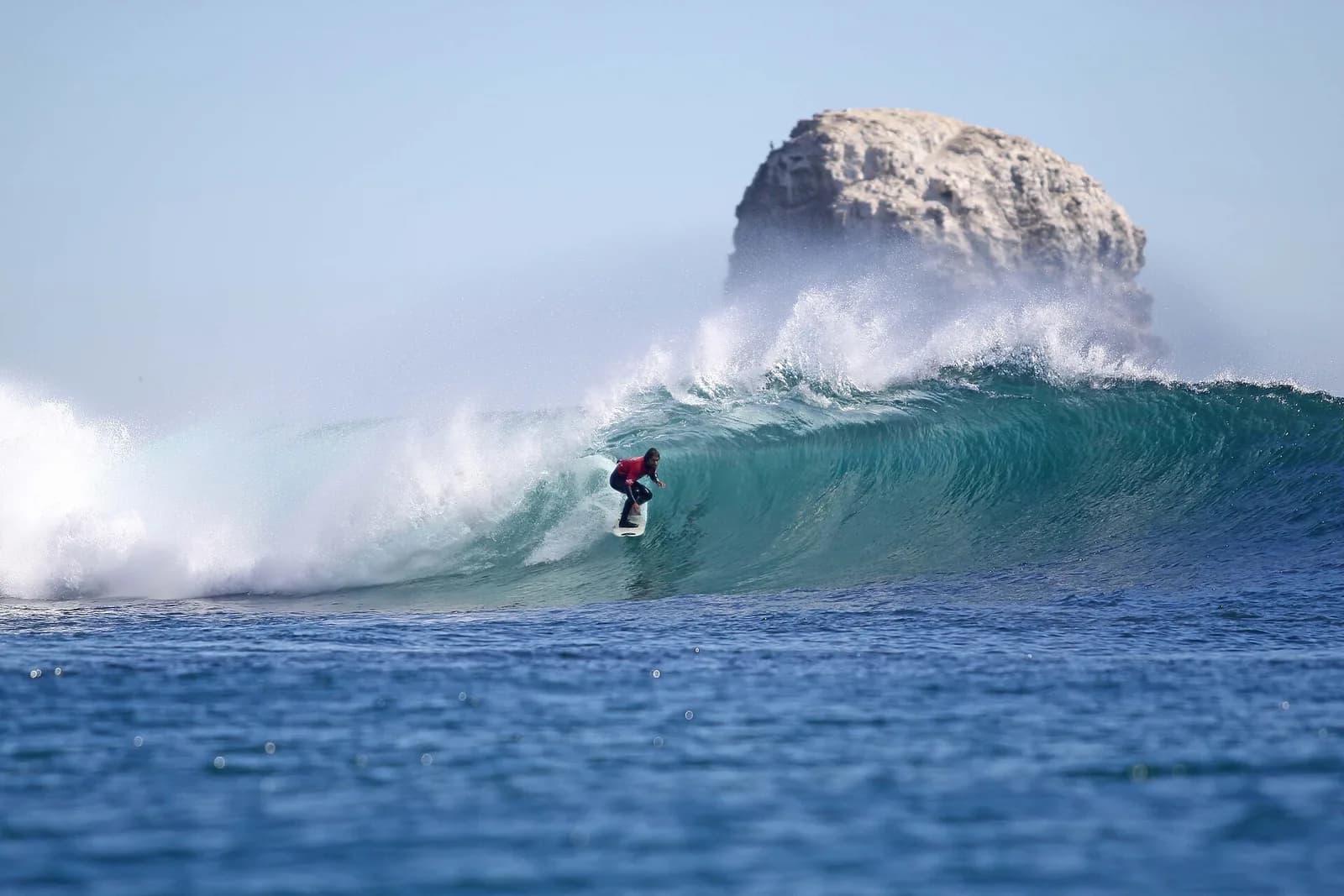
Powerful Pacific swells rise around the point, producing heavy waves during the largest swell events.
Left-Hand Point Break
The wave wraps around the headland and breaks left along the coastline, creating exceptionally long rides.
Punta de Lobos Headland
A rugged rocky point that shelters the inner coastline and shapes the direction of the breaking wave.
Los Morros
Two iconic rock pillars rising from the ocean immediately offshore from Punta de Lobos.
Playa Punta de Lobos
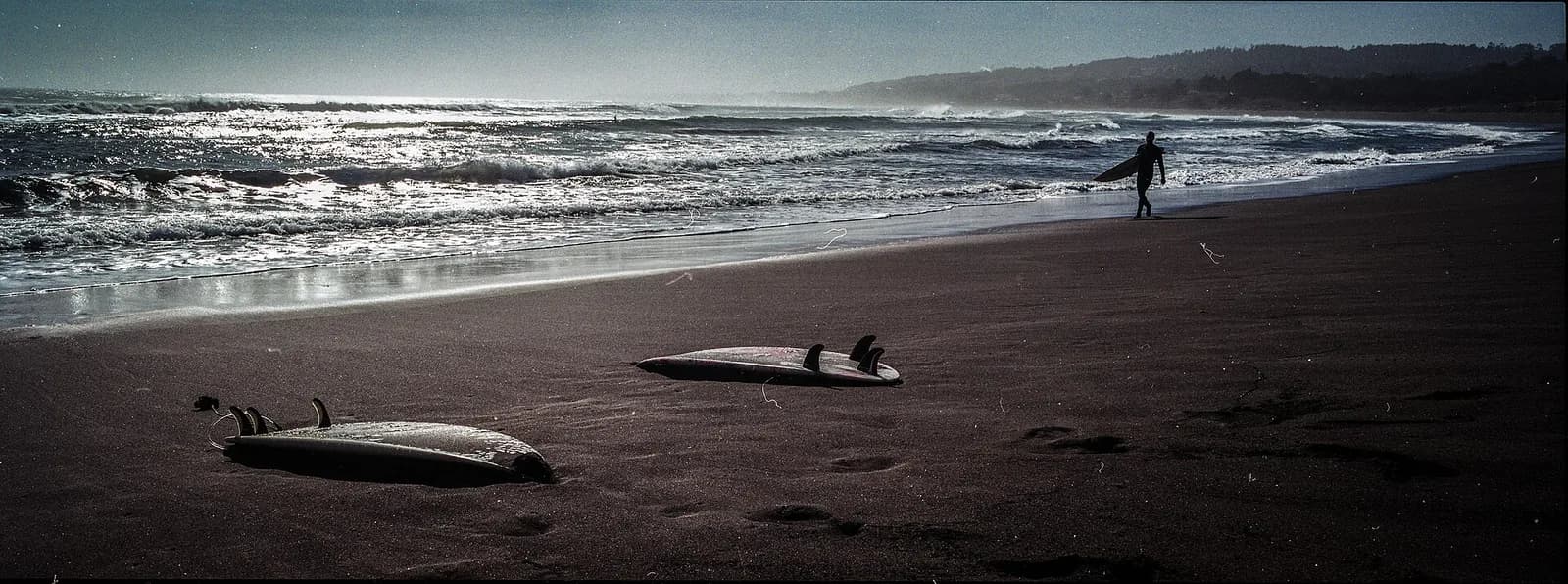
A broad dark-sand beach stretching north from the point and providing the main access to the area.
Mirador Punta de Lobos
A clifftop viewpoint overlooking Los Morros, the surf break, and the surrounding Pacific coastline.
Pichilemu
Chile’s best-known surfing town, located a short distance north of Punta de Lobos.
Southwest Swell
Long-period ocean energy approaches from the southwest before wrapping around the rocky point.
Pacific Ocean
The open ocean supplying the powerful swells that make Punta de Lobos an internationally important surf location.
Wave face
Swell history & forecast
Recent results and the next 16 days, shown against stacked 1.8 m people for scale.
Next 16 days
- Swell period
- 15s
- Wind
- S 12 km/h
- Score
- 65
- Confidence
- 75%
- Swell period
- 14s
- Wind
- S 14 km/h
- Score
- 72
- Confidence
- 68%
- Swell period
- 15.5s
- Wind
- SE 14 km/h
- Score
- 76
- Confidence
- 68%
- Swell period
- 15s
- Wind
- S 15 km/h
- Score
- 58
- Confidence
- 65%
- Swell period
- 12s
- Wind
- S 14 km/h
- Score
- 52
- Confidence
- 55%
- Swell period
- 12s
- Wind
- S 15 km/h
- Score
- 45
- Confidence
- 45%
- Swell period
- 12s
- Wind
- S 14 km/h
- Score
- 48
- Confidence
- 45%
- Swell period
- 14s
- Wind
- S 15 km/h
- Score
- 48
- Confidence
- 35%
- Swell period
- 14s
- Wind
- SE 13 km/h
- Score
- 74
- Confidence
- 35%
- Swell period
- 13s
- Wind
- SE 18 km/h
- Score
- 58
- Confidence
- 35%
- Swell period
- 11s
- Wind
- S 18 km/h
- Score
- 28
- Confidence
- 30%
- Swell period
- 12s
- Wind
- SE 18 km/h
- Score
- 38
- Confidence
- 30%
- Swell period
- 14s
- Wind
- S 15 km/h
- Score
- 50
- Confidence
- 25%
- Swell period
- 14s
- Wind
- S 18 km/h
- Score
- 62
- Confidence
- 25%
- Swell period
- 13s
- Wind
- S 14 km/h
- Score
- 52
- Confidence
- 25%
When to visit
Month-by-month season planner
Typical big-wave season: April — September. Forecasts still decide the worthwhile days.
- Jan1.8 mAverage swellTypical 0.9–2.8 mUsually quieter
- Feb1.7 mAverage swellTypical 0.9–2.7 mUsually quieter
- Mar1.8 mAverage swellTypical 0.9–2.8 mShoulder month
- Apr2.0 mAverage swellTypical 1.1–3.2 mBig-wave season
- May2.3 mAverage swellTypical 1.2–3.6 mBig-wave season
- Jun2.5 mAverage swellTypical 1.3–4.0 mBig-wave season
- Jul2.7 mAverage swellTypical 1.4–4.3 mBig-wave season
- Aug2.6 mAverage swellTypical 1.4–4.1 mBig-wave season
- Sep2.3 mAverage swellTypical 1.2–3.6 mBig-wave season
- Oct2.1 mAverage swellTypical 1.1–3.3 mShoulder month
- Nov1.9 mAverage swellTypical 1.0–3.0 mUsually quieter
- Dec1.8 mAverage swellTypical 0.9–2.8 mUsually quieter
Offshore significant wave height (Hs). Typical range is P10–P90, not breaking wave-face height.
- Confidence
- Medium
- Estimated uncertainty
- ±0.3 m
Plan the journey
How to reach Punta de Lobos
Travel times are estimates and can increase with traffic, weather, border formalities or major swell crowds.
Arturo Merino Benítez International Airport, Santiago (SCL)
Santiago is the main international gateway for the drive to Chile’s central coast.
Santiago Airport → Punta de Lobos
Travel southwest toward Melipilla, San Pedro and Pichilemu. The route is approximately 210 kilometres and can lengthen with traffic.
Travel detailsPunta de Lobos or Pichilemu
Stay at the point for early condition checks, or in Pichilemu for more restaurants, shops and accommodation.
Accommodation → Punta de Lobos access
The point is immediate from local accommodation and roughly 10–15 minutes by car or colectivo from central Pichilemu.
Rock entry → Outside peaks
Experienced surfers time an entry from the rocks and paddle around the point. The route requires local knowledge of swell and current.
Travel detailsLocally organised safety support
Organised teams may use jet-ski support on exceptional days. Visitors should confirm local rules because this is not standard recreational access.
Guides
Plan the whole visit
Forecast, viewing, travel and safety guidance in one place.
When to visit
Plan flexibly
The established big-wave season at Punta de Lobos is April — September. The best days are uncommon and usually become clear only a few days ahead.
Read guide →Where to watchGive the ocean room
View Punta de Lobos from established public viewpoints and obey closures, barriers and local authorities.
Read guide →Where to stayTravel with flexibility
Stay within easy reach of Punta de Lobos, but avoid booking solely around a long-range forecast.
Read guide →SafetyNon-negotiable basics
Big-wave coastlines are hazardous for spectators and surfers. Conditions at Punta de Lobos can change quickly.
Read guide →RecordsVerified history first
Punta de Lobos has earned its place in big-wave history through remarkable conditions, surfers and local communities.
Read guide →Common questions
Punta de Lobos FAQs
Practical answers for planning a safe, well-informed visit.
When is the main swell season at Punta de Lobos?+
The typical season runs from April through September, when long-period southwest swells reach Chile’s central coast. Conditions can occur outside that window as well.
Where is Punta de Lobos?+
Punta de Lobos is a rocky headland just south of Pichilemu, Chile. Visitors can stay at the point for direct access or in Pichilemu for more services.
How do experienced surfers enter at Punta de Lobos?+
Experienced surfers normally time a rock entry and paddle around the point toward the outside peaks. Swell, current and slippery rocks make local knowledge essential.
Can visitors watch Punta de Lobos from land?+
Yes. Clifftop areas around the point and Mirador Punta de Lobos overlook Los Morros and the breaking wave. Visitors should remain behind barriers and protect the fragile headland.