
 quiet
quiet
- Swell period
- 15s
- Wind
- E 19.3 km/h
- Score
- 72
- Confidence
- 65%
All spots / Tahiti
May — October
Teahupoʻo
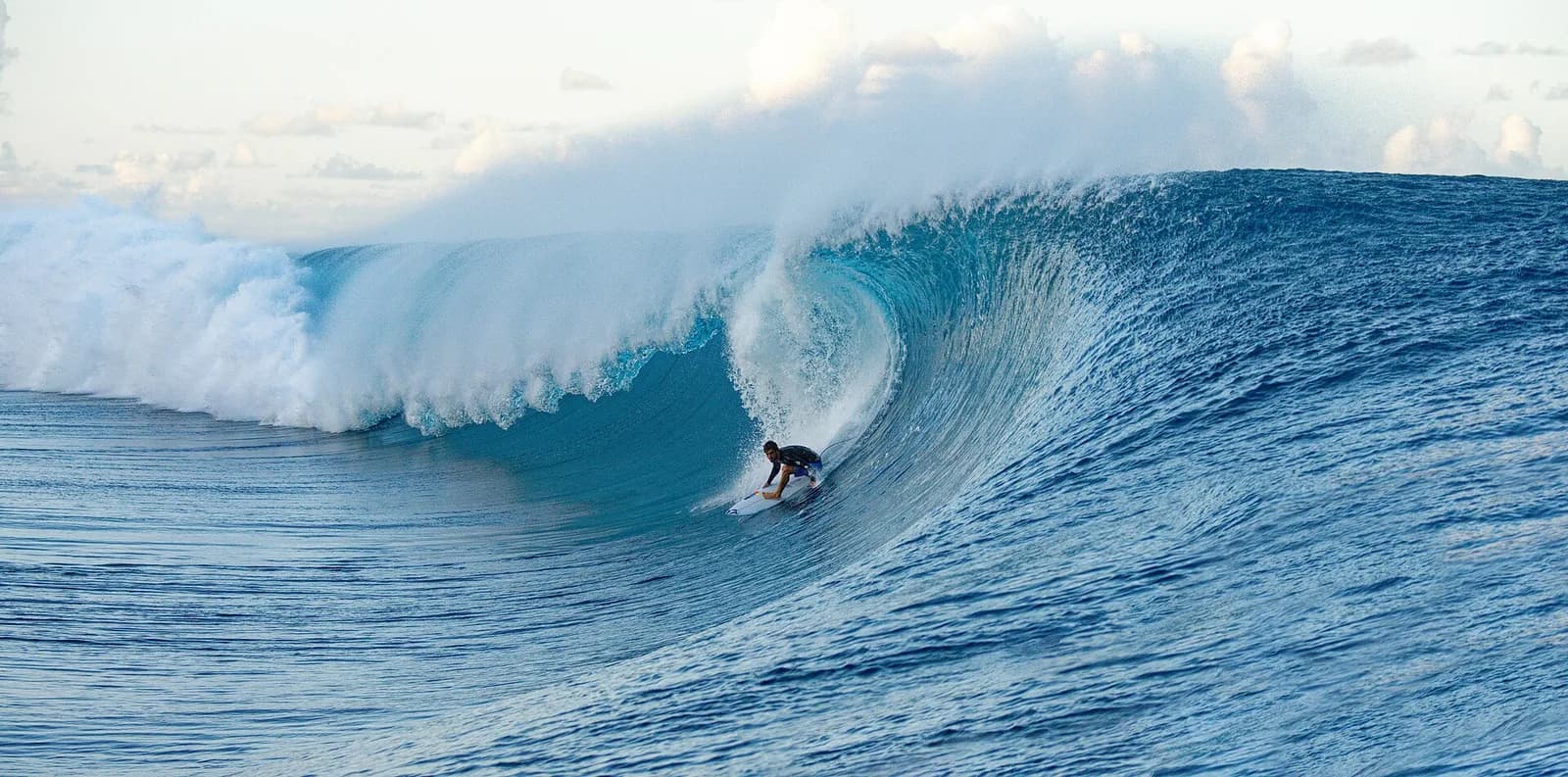
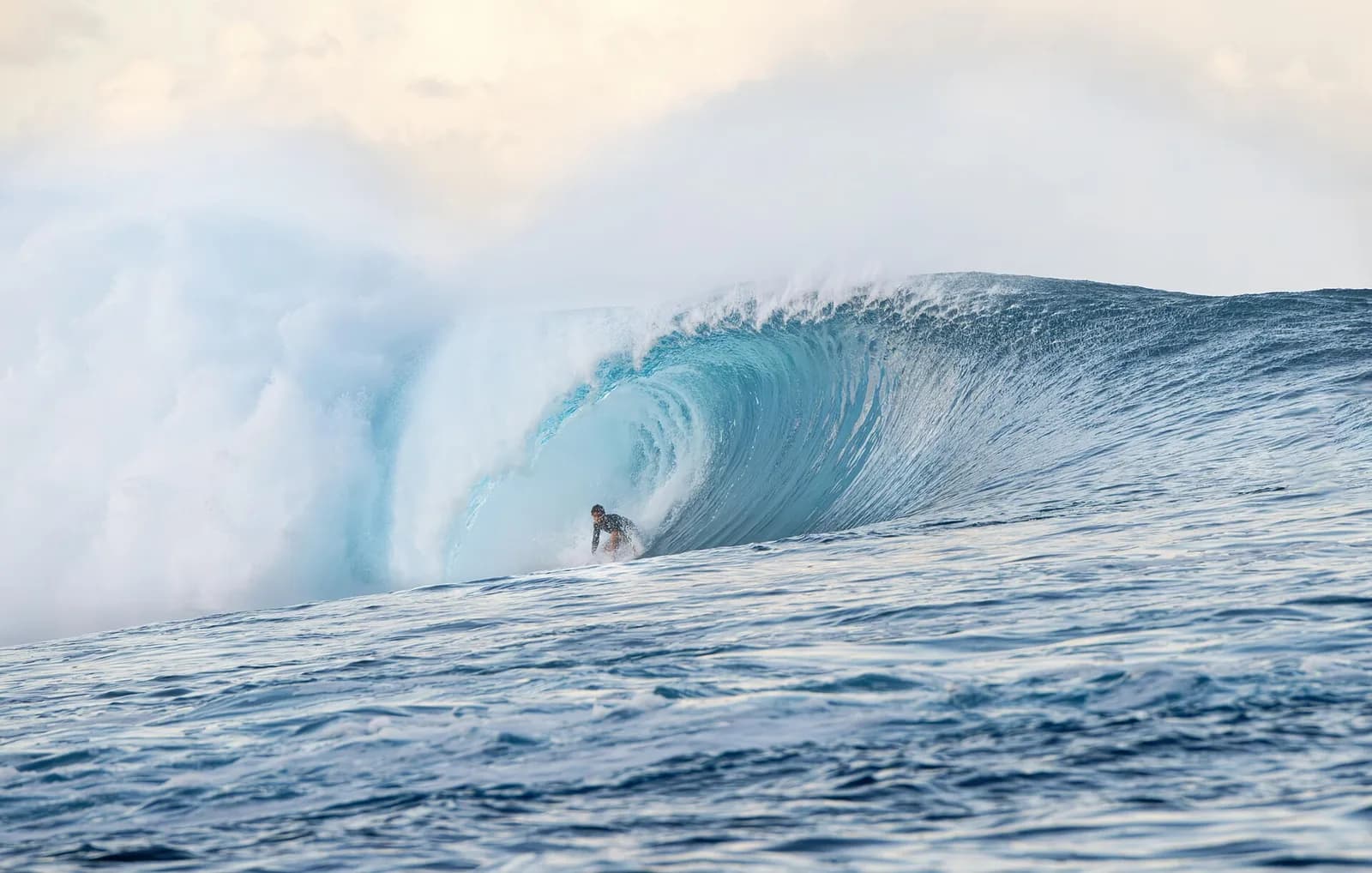
Long-period southern swells meet an abrupt reef to create an intensely powerful, below-sea-level barrel.
quiet
Valid 2026-09-04
72Wave score
Forecast confidence65%
At a glance
The latest outlook for Teahupoʻo
No major big-wave window is confirmed yet. We are monitoring the next long-period pulse.
Wave face2.4–3.7 m
Swell period15s
WindE 19.3 km/h
Confidence65%
Location
Where is Teahupoʻo?
Explore the surrounding coastline and open the marker for location details.
- Teahupoʻo: -17.85, -149.267
See the break
Explore the area
What to do in Teahupoʻo
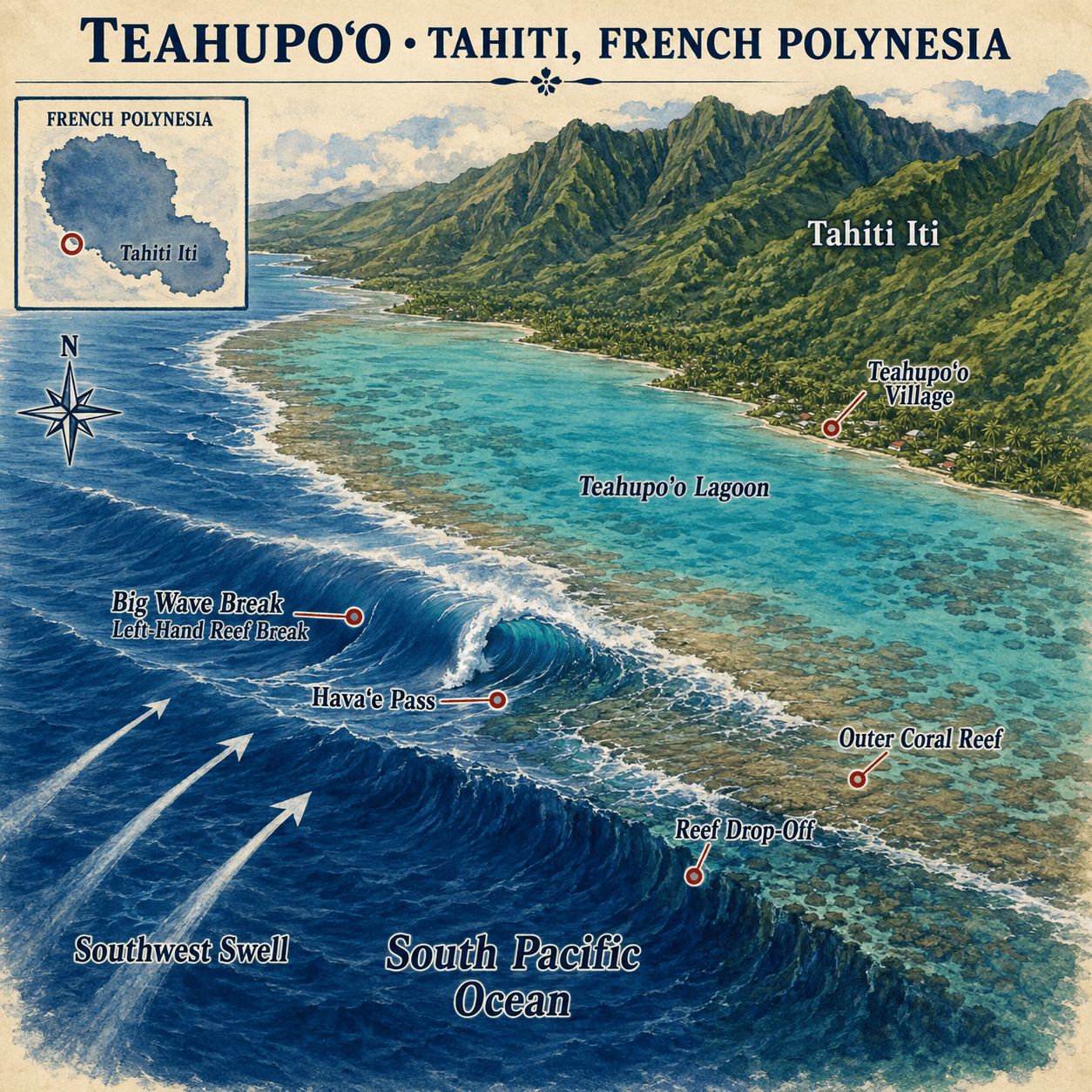
Use the illustrated map to discover beaches, viewpoints and local landmarks.
Teahupoʻo
A legendary Tahitian surf location renowned for one of the heaviest and most spectacular waves in the world.
Big Wave Break
Deep-ocean swell rises abruptly over the shallow reef, forming an exceptionally thick and powerful barrel.
Left-Hand Reef Break
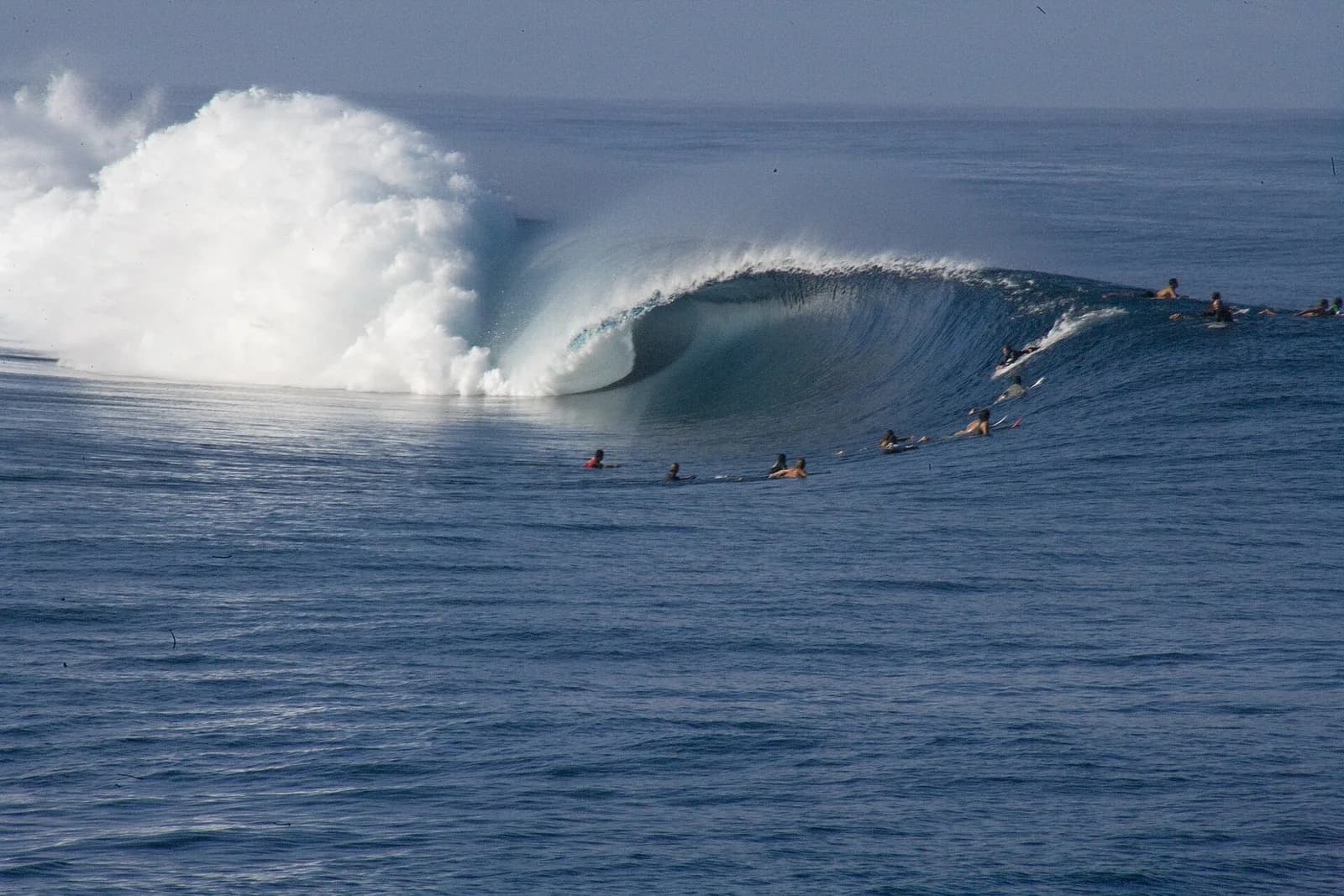
The wave breaks left across the reef, creating a fast ride beneath a dramatically folding lip.
Havaʻe Pass
The opening in the barrier reef where ocean swell is focused into Teahupoʻo’s famous wave.
Outer Coral Reef
A shallow coral platform separating the deep South Pacific from the protected lagoon.
Reef Drop-Off
The steep underwater transition where deep ocean water meets the shallow reef and forces swell sharply upward.
Teahupoʻo Lagoon
A calm turquoise lagoon separating the outer surf break from the village shoreline.
Teahupoʻo Village
A small coastal community situated beneath the mountains on the southwest coast of Tahiti Iti.
Tahiti Iti
Tahiti’s smaller southeastern peninsula, known for its lush mountains, reefs and remote coastline.
Southwest Swell
Powerful ocean energy approaches from the southwest before reaching the reef at Havaʻe Pass.
South Pacific Ocean
The deep open ocean supplying the long-period swells that make Teahupoʻo possible.
French Polynesia
The South Pacific island territory that includes Tahiti and the celebrated Teahupoʻo surf break.
Wave face
Swell history & forecast
Recent results and the next 16 days, shown against stacked 1.8 m people for scale.
Next 16 days
- Swell period
- 15s
- Wind
- E 24 km/h
- Score
- 72
- Confidence
- 75%
- Swell period
- 13s
- Wind
- E 18.5 km/h
- Score
- 62
- Confidence
- 75%
- Swell period
- 13.5s
- Wind
- E 22 km/h
- Score
- 62
- Confidence
- 68%
- Swell period
- 13.5s
- Wind
- E 18 km/h
- Score
- 42
- Confidence
- 60%
- Swell period
- 14s
- Wind
- E 20 km/h
- Score
- 62
- Confidence
- 55%
- Swell period
- 13.5s
- Wind
- E 18 km/h
- Score
- 62
- Confidence
- 55%
- Swell period
- 13s
- Wind
- E 18 km/h
- Score
- 58
- Confidence
- 38%
- Swell period
- 13s
- Wind
- E 18 km/h
- Score
- 52
- Confidence
- 40%
- Swell period
- 13.5s
- Wind
- E 22 km/h
- Score
- 65
- Confidence
- 42%
- Swell period
- 13s
- Wind
- E 22 km/h
- Score
- 42
- Confidence
- 35%
- Swell period
- 13s
- Wind
- E 19 km/h
- Score
- 45
- Confidence
- 30%
- Swell period
- 13.5s
- Wind
- E 18 km/h
- Score
- 48
- Confidence
- 25%
- Swell period
- 13.5s
- Wind
- E 18 km/h
- Score
- 42
- Confidence
- 30%
- Swell period
- 13.5s
- Wind
- E 18 km/h
- Score
- 48
- Confidence
- 20%
- Swell period
- 13.5s
- Wind
- E 18 km/h
- Score
- 48
- Confidence
- 25%
When to visit
Month-by-month season planner
Typical big-wave season: May — October. Forecasts still decide the worthwhile days.
- Jan1.7 mAverage swellTypical 0.8–2.8 mUsually quieter
- Feb1.7 mAverage swellTypical 0.8–2.8 mUsually quieter
- Mar1.8 mAverage swellTypical 0.9–2.9 mUsually quieter
- Apr2.0 mAverage swellTypical 1.0–3.3 mShoulder month
- May2.2 mAverage swellTypical 1.1–3.6 mBig-wave season
- Jun2.3 mAverage swellTypical 1.1–3.8 mBig-wave season
- Jul2.4 mAverage swellTypical 1.2–3.9 mBig-wave season
- Aug2.3 mAverage swellTypical 1.1–3.8 mBig-wave season
- Sep2.2 mAverage swellTypical 1.1–3.6 mBig-wave season
- Oct2.0 mAverage swellTypical 1.0–3.3 mBig-wave season
- Nov1.8 mAverage swellTypical 0.9–2.9 mShoulder month
- Dec1.7 mAverage swellTypical 0.8–2.8 mUsually quieter
Offshore significant wave height (Hs). Typical range is P10–P90, not breaking wave-face height.
- Confidence
- Medium
- Estimated uncertainty
- ±0.3 m
Plan the journey
How to reach Teahupoʻo
Travel times are estimates and can increase with traffic, weather, border formalities or major swell crowds.
Big-wave access warning
Final lineup access requires professional big-wave experience, local knowledge and a coordinated safety team when conditions are large.
Faaʻa International Airport, Papeete (PPT)
Tahiti’s international gateway sits immediately west of Papeete.
Papeete Airport → Teahupoʻo
Follow the coastal road southeast through Taravao and onto Tahiti Iti. The village is roughly 70 kilometres from the airport.
Travel detailsTeahupoʻo village or southern Tahiti Iti
A local base keeps you close to boat operators, surf crews and the end of the coastal road while avoiding a pre-dawn drive from Papeete.
Accommodation → Marina or lagoon pickup
Reach the agreed departure point by car, scooter or on foot and confirm the return pickup before leaving shore.
Lagoon pickup → Reef channel
A local taxi or surf boat crosses the lagoon to the channel and viewing area. First-time visitors should arrange a local operator in advance.
Travel detailsVillage lagoon → Outer reef
Experienced surfers sometimes paddle across the lagoon, but local boat support is the safer first-visit option.
Guides
Plan the whole visit
Forecast, viewing, travel and safety guidance in one place.
When to visit
Plan flexibly
The established big-wave season at Teahupoʻo is May — October. The best days are uncommon and usually become clear only a few days ahead.
Read guide →Where to watchGive the ocean room
View Teahupoʻo from established public viewpoints and obey closures, barriers and local authorities.
Read guide →Where to stayTravel with flexibility
Stay within easy reach of Teahupoʻo, but avoid booking solely around a long-range forecast.
Read guide →SafetyNon-negotiable basics
Big-wave coastlines are hazardous for spectators and surfers. Conditions at Teahupoʻo can change quickly.
Read guide →RecordsVerified history first
Teahupoʻo has earned its place in big-wave history through remarkable conditions, surfers and local communities.
Read guide →Common questions
Teahupoʻo FAQs
Practical answers for planning a safe, well-informed visit.
When is the main swell season at Teahupoʻo?+
The main season is generally May through October, when long-period Southern Hemisphere swells reach Tahiti. Conditions still vary substantially from day to day.
How do visitors reach the Teahupoʻo wave?+
The break sits on the outer reef across the lagoon. Most visitors use a local taxi boat or surf boat from the village, while experienced surfers may paddle across in suitable conditions.
Where should visitors stay for Teahupoʻo?+
Teahupoʻo village or southern Tahiti Iti is the most practical base because it is close to lagoon pickups, local operators and the end of the coastal road.
Is Teahupoʻo suitable for beginner surfers?+
No. The famous outer-reef wave is extremely powerful, shallow and technically demanding. Large conditions require elite ability, local guidance and professional water-safety support.